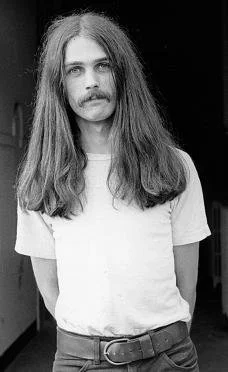
about Gary
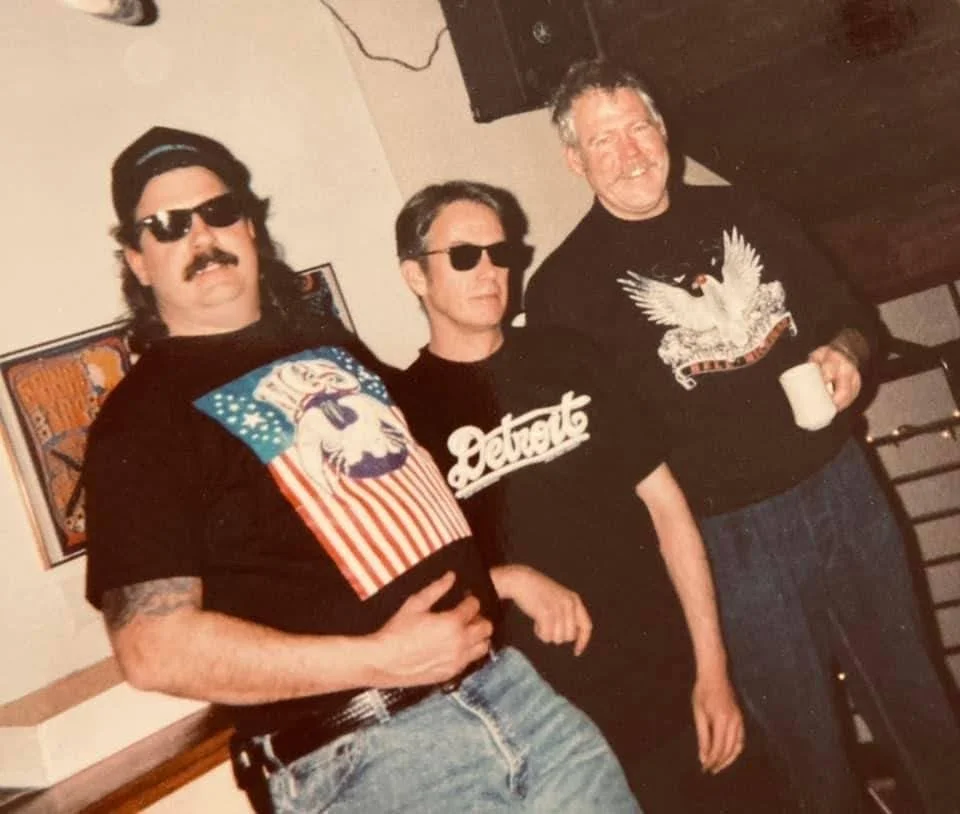
Born in 1946, raised in Lincoln Park, shaped by the city's working-class grit and its hunger for something louder. He taught himself everything. And what he built from that — five decades of concert posters, political art, and music graphics — stands alongside the best work his generation ever produced.
He met life on his own terms. Quiet about it, too. While others chased the spotlight, Gary let the work speak. It always said enough.
How It Started
In 1966, Gary came back from San Francisco changed. He'd seen the Fillmore. The Avalon. The posters on every wall. He wanted that — but Detroit's version. Rawer. More working class. More real.
When Russ Gibb opened the Grande Ballroom that October, Gary was there. His first poster — the Seagull — went up on opening night. He was twenty years old.
From that point forward, he was the Grande's primary visual voice. A new poster every week. Light shows with the collective. Living in the commune houses. Fully in it. When the scene shifted and the White Panther Party rose up around John Sinclair and the MC5, Gary became Minister of Art. The posters got louder. More political. Exactly right for the moment.
He never stopped being that — an artist of the people, embedded in whatever community he was part of, wherever he lived.
The Body of Work
What Gary left behind is staggering.
Hundreds of posters. Concert bills, festival art, record packaging, political broadsheets. The John Sinclair Freedom Rally. Associate Art Director at Creem magazine through the late seventies. West Coast collaborations with Chuck Sperry and Dennis Loren. Work for the Fillmore in San Francisco. A career that kept evolving without ever losing its original edge.
His MC5 album cover has been on continuous display at the Rock and Roll Hall of Fame since opening day in 1995. Museums hold his work in permanent collections. Books and publications have documented his output for decades. New generations of poster artists study his color use and lettering like it's a master class — because it is.
Gary Grimshaw passed in 2014. The work remains. His family carries the legacy forward.